Cart
0
Recommended for you



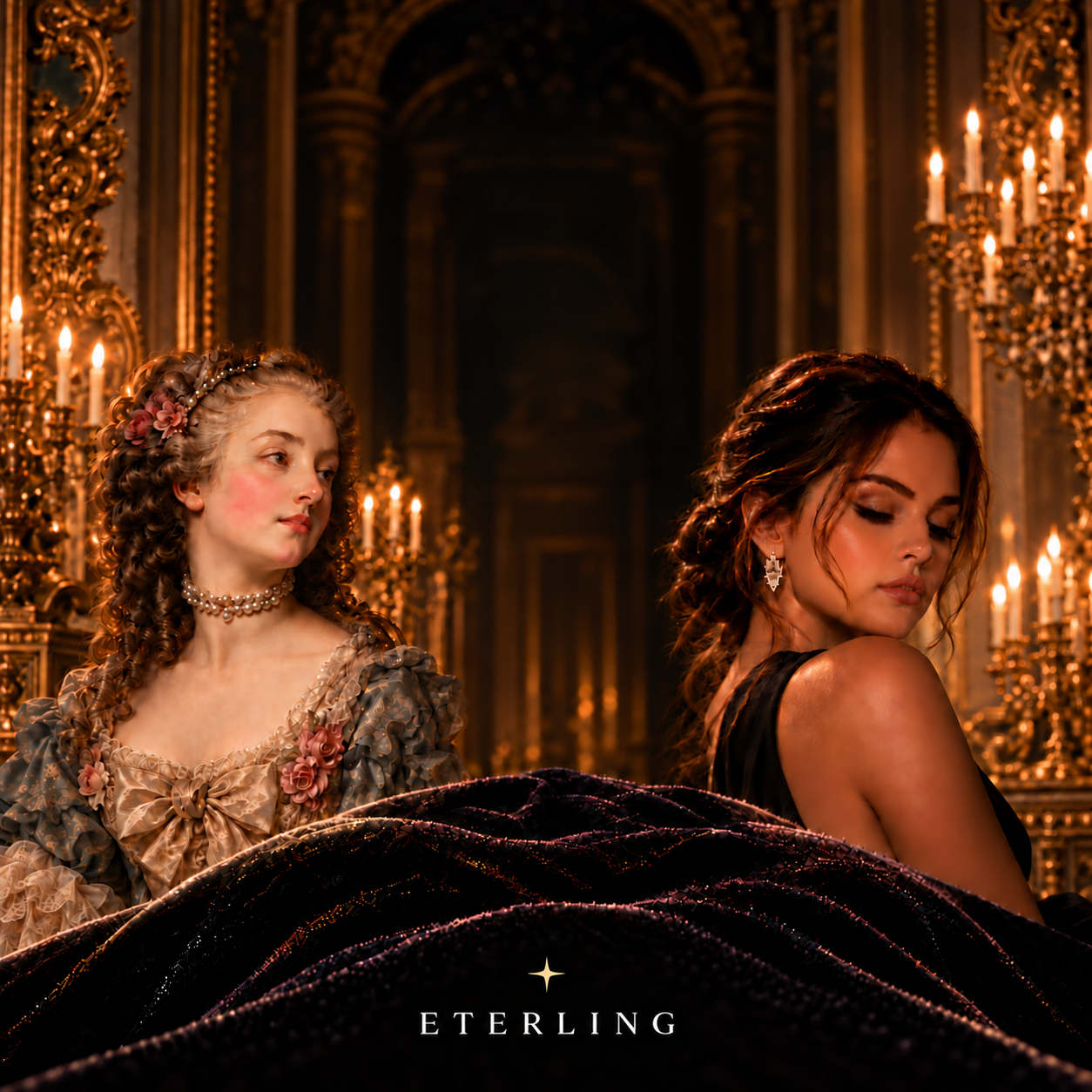
Because sparkle is not just about light. It is about what you choose to wear.
When it comes to choosing a gemstone, things can get confusing.
Moissanite, lab-grown diamond, natural diamond, zircon… they all shine, but not in the same way.
At Eterling, we believe in transparency, in our gems and in our words.
So let’s break it down and understand what makes each stone different.
A natural diamond is formed deep within the Earth over billions of years, under extreme pressure and heat.
It is a rare geological creation, symbolic, enduring, and full of history.
Each diamond is unique, with tiny inclusions that reflect its natural journey.
That is why diamonds are graded using the 4Cs: Cut, Color, Clarity, and Carat.
These characteristics determine not only their beauty and sparkle, but also their rarity and value.
 |
 |
|
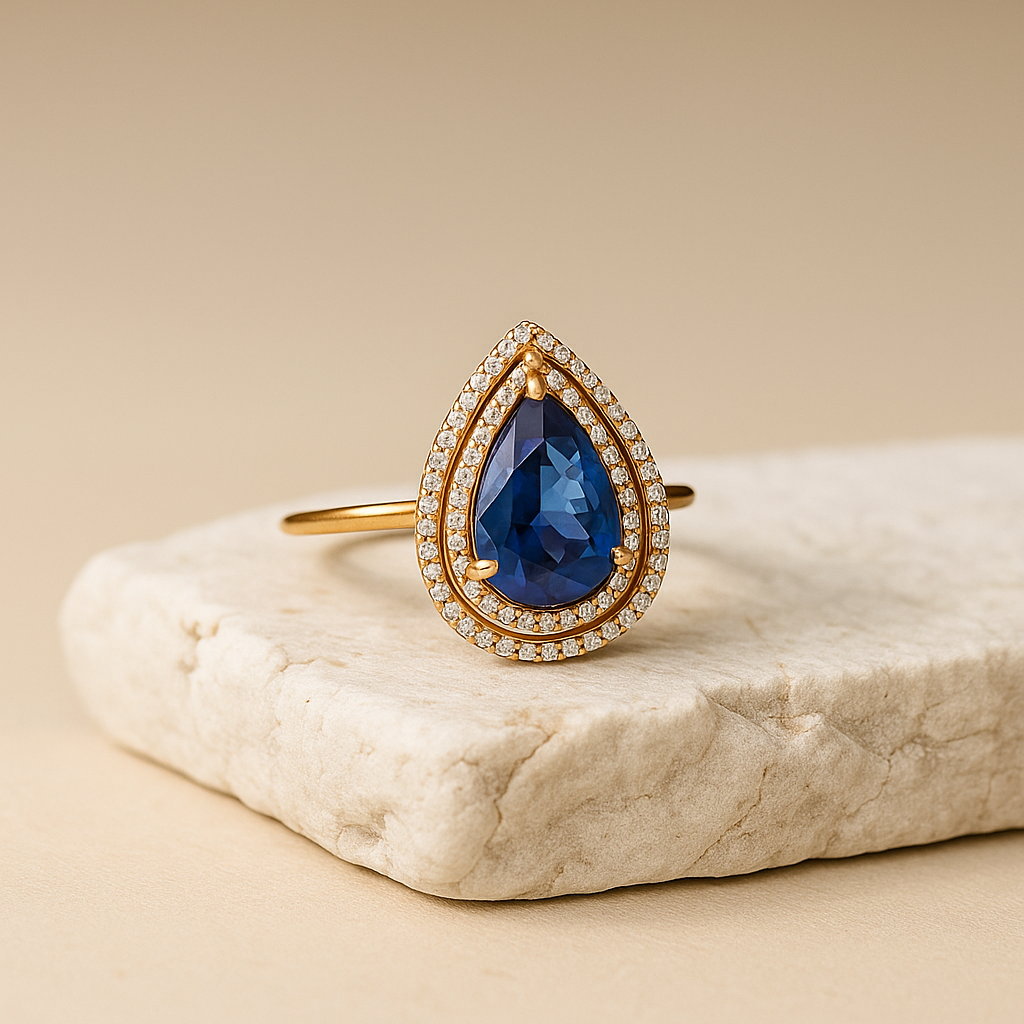
A modern solitaire crafted with a natural diamond, chosen for its rarity, clarity, and timeless symbolism. |
Sculptural yet delicate, this natural diamond ring reflects balance, contrast, and enduring design. |
But this rarity comes at a cost: environmental impact, mining conditions, and high market prices.
That is why, in recent years, many jewellers, including us, have looked for more conscious alternatives, offering strong brilliance and beauty with a lighter footprint and often, a more accessible price.
And that is where lab-grown diamonds come in: real diamonds, created for a modern world.
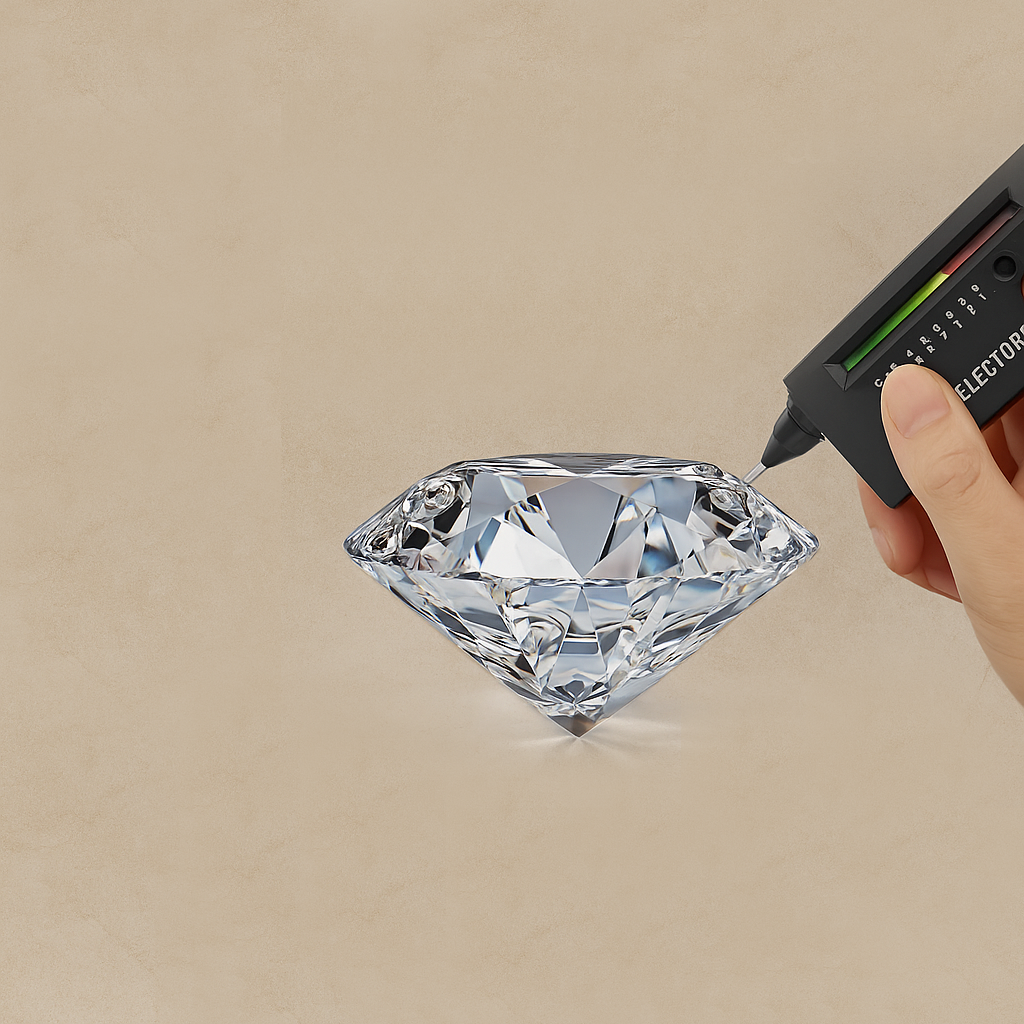
A lab diamond is not an imitation. It is a real diamond, identical in composition, hardness, and brilliance to one formed in nature.
The only difference is its origin. Instead of being mined, it is created in laboratories that replicate the Earth’s natural growth conditions.
In other words: same sparkle, same durability, same authenticity.
The beauty, composition, and hardness, 10/10 on the Mohs scale, are exactly the same. Even professional gemologists need specialized tools to tell them apart.
Where they differ is in their footprint and philosophy.
Because they are cultivated in controlled environments, lab-grown diamonds avoid many of the environmental and ethical concerns often associated with large-scale mining. They also offer better traceability, so you know where your diamond comes from.
And while they shine just as brightly, they are also more budget-friendly, typically costing less than natural diamonds of similar quality. That means you can choose a larger or higher-quality stone without giving up beauty, durability, or meaning.
For us at Eterling, lab-grown diamonds represent a modern approach to fine jewelry: real diamonds, strong quality, more transparency, and a price that makes sense.
 |
 |
|
Discover the Aurelia Seven Ring Seven lab-grown diamonds in a refined half eternity design. A piece made to carry light, meaning, and everyday elegance. |
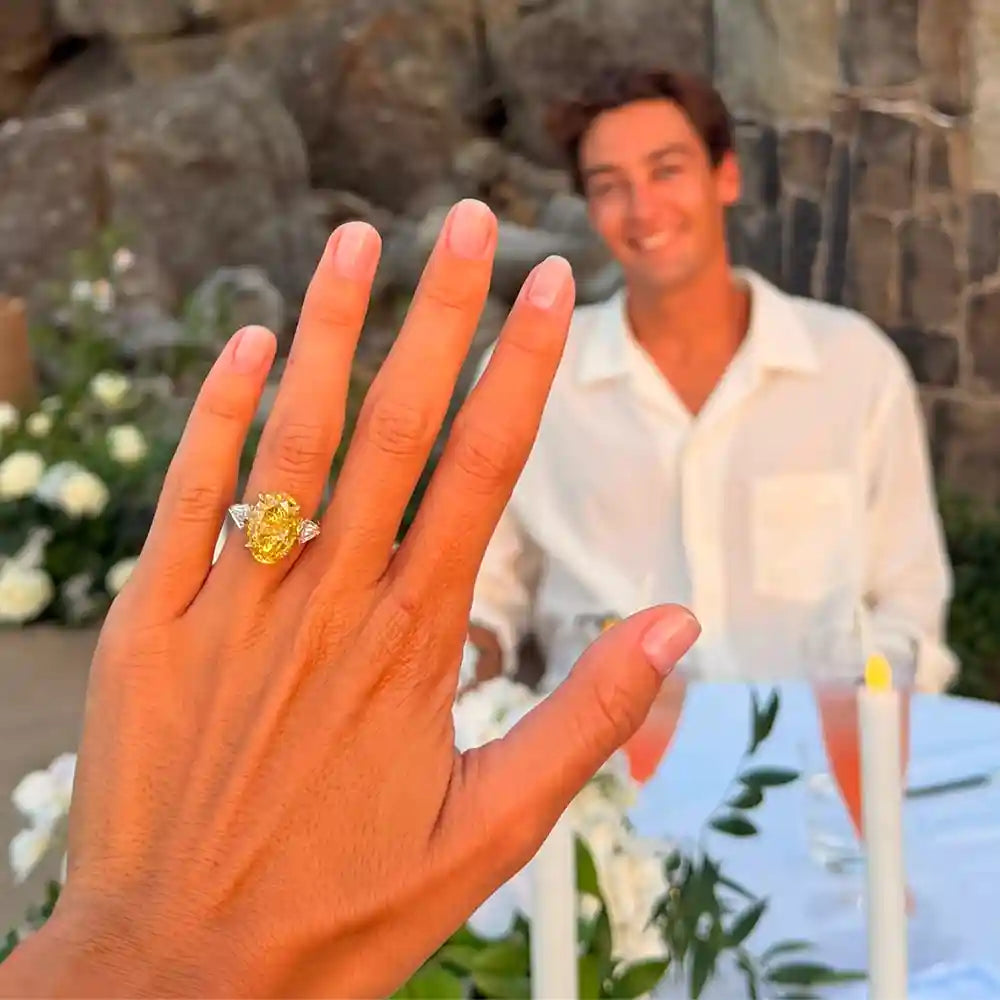
A 4.50 ct lab-grown diamond ring designed for those who want real diamond brilliance with a more modern approach. |
And if you love light with more fire, more contrast, and a different character, moissanite might be your match.
Moissanite has a story of its own.
Originally discovered in 1893 by French chemist Henri Moissan inside a meteor crater in Arizona, this gemstone was first linked to the stars.
Natural moissanite is extremely rare, so the moissanite used in jewelry today is lab-created, making it both sustainable and ethically sourced.
Scientifically, moissanite is made of silicon carbide, not carbon like a diamond. Its optical properties are different too. It reflects light with more fire and rainbow dispersion than a diamond, creating flashes of color that move with the hand.
Moissanite is not a diamond, and it does not need to be.
It has its own kind of beauty: brilliant, durable, modern, and full of character.
With a hardness of 9.25/10 on the Mohs scale, it is strong enough for everyday wear. Its lab-created origin also makes it a smart choice for those who want a beautiful stone with a more accessible price.
At Eterling, we love moissanite for what it represents: freedom, individuality, and a different way to shine.
✨ A star-born gem for those who choose their own light.
|
Two stones. Two energies. An oval and a trillion moissanite, set face to face in an open silhouette that creates movement. |
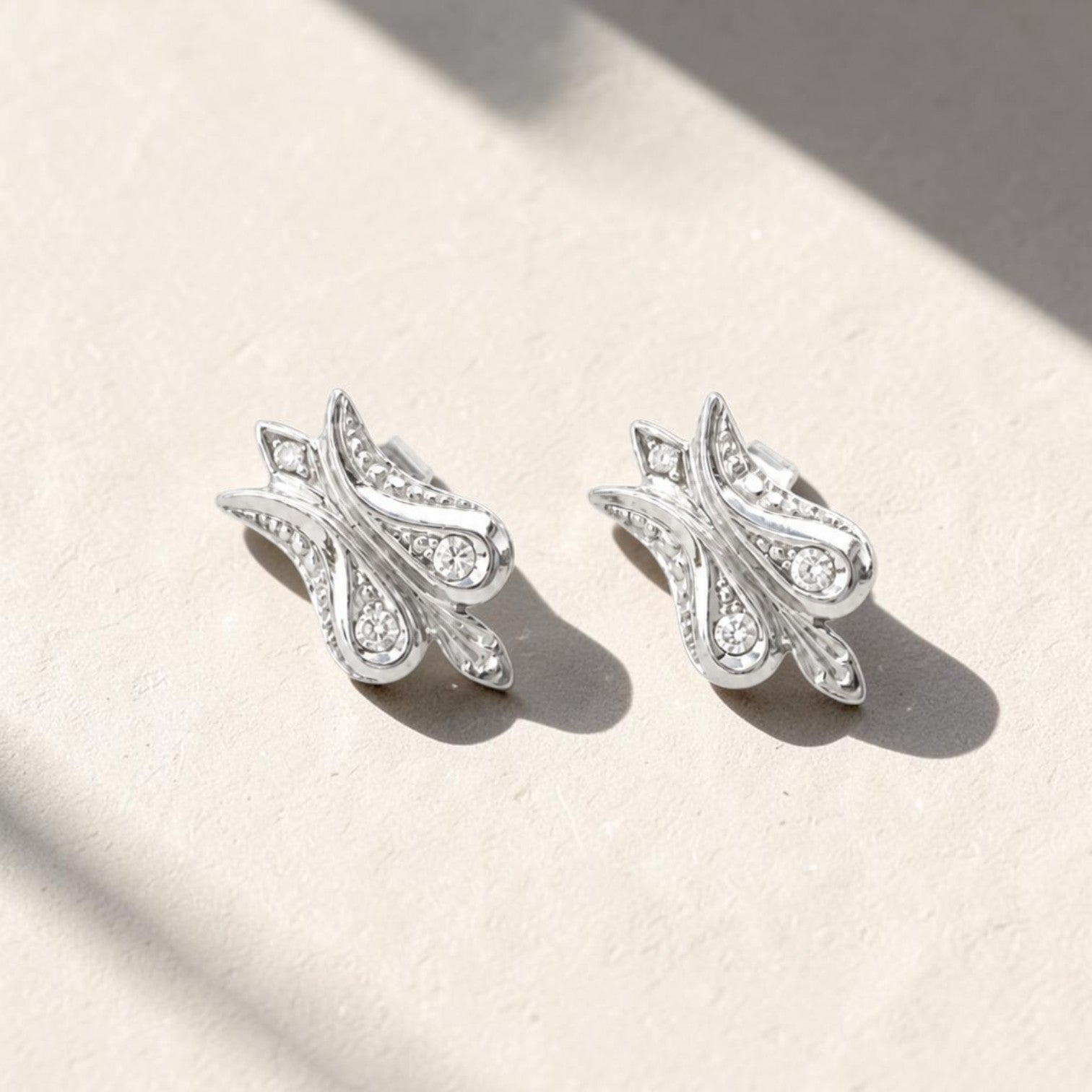
Luminous and graceful, crafted to capture soft light and effortless beauty. A jewel that blooms with every sparkle. |
Let’s clarify one of the most common confusions in jewelry.
Cubic zirconia, often called CZ, is not the same as moissanite or diamond. It is a synthetic crystal made of zirconium oxide, created to imitate the appearance of a diamond, without sharing its composition, durability, or lasting brilliance.
At first glance, it can look bright. But unlike moissanite or diamond, its sparkle does not age in the same way. Over time, it can lose its shine, become dull, or get scratched, especially when worn daily. This is due to its lower hardness, around 8 on the Mohs scale.
Many people are not aware of this difference, and some stores or websites maintain the confusion, sometimes presenting cubic zirconia as a diamond-like stone or even as moissanite.
It is always worth checking the details. If a description mentions CZ or zirconium oxide, it is neither a diamond nor a moissanite.
Compared to moissanite and diamonds, cubic zirconia is:
- Softer, around 8 on the Mohs scale, meaning it scratches more easily
- Less vibrant in terms of brilliance and fire
- More likely to become cloudy over time
In the end, it is not about which stone is “better.”
It is about which one feels right for you, your story, your values, and your style.
Each gemstone carries its own kind of beauty.
To make it simple:
| Gemstone | Composition | Sparkle | Durability | Ethics | Price |
|---|---|---|---|---|---|
| Natural Diamond | Pure carbon | Classic white brilliance | 10/10 | Depends on sourcing | 💎💎💎💎💎 |
| Lab Diamond | Pure carbon | Identical to natural | 10/10 | Traceable | 💎💎💎💎 |
| Moissanite | Silicon carbide | Rainbow fire and vivid light | 9.25/10 | Lab-created | 💎💎💎 |
✨ Choose a natural diamond if you love tradition and the symbolism of something born from the Earth itself. A piece of nature’s history, chosen for its rarity and emotional depth.
💠 Choose a lab diamond if you want a real diamond with a more modern origin, strong traceability, and the possibility of choosing a larger or higher-quality stone for your budget.
🌟 Choose moissanite if you want strong brilliance, rainbow fire, durability, and a stone with its own character. A beautiful choice if you want something bright, modern, and different.
Whatever your choice, what truly matters is the connection between you and your jewel.
The most beautiful stone is not always the rarest or the most expensive.
It is the one that feels right, carries meaning, or reminds you of something you never want to forget.
At Eterling, we believe that is what true sparkle is about: meaning, emotion, and the story you wear every day.
Ready to find the one that speaks to you?
Explore our lab-grown diamond and moissanite creations, crafted with care, designed to shine for years, and made to remind you that sparkle and meaning can beautifully coexist.
Eterling, eternal sparkling.