

Cart
0
Recommended for you

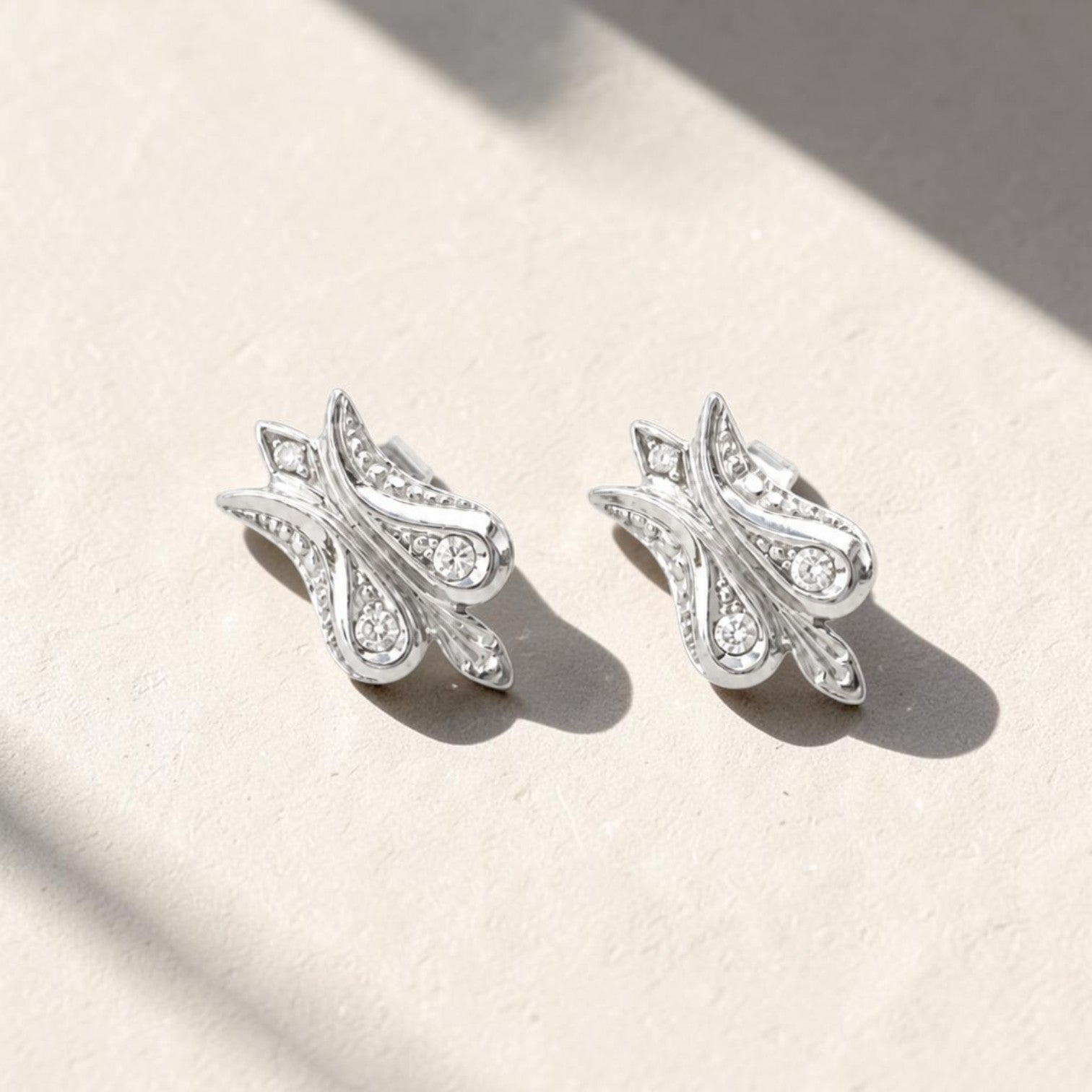


Moissanite is often discovered when looking for an ethical and accessible alternative to diamond. Yet for many clients, it remains unfamiliar. Questions naturally arise. What exactly is moissanite? How does it compare to diamond? And is it truly suitable for everyday jewelry?
At Eterling, we believe that understanding your stone is an essential part of choosing a jewel. A meaningful piece should be selected with confidence, knowledge, and intention, never with uncertainty.
Moissanite is a gemstone with a truly unique and fascinating origin.
It was first identified in 1893 by French scientist Henri Moissan, who discovered microscopic crystals inside the crater of a meteorite. Initially, these crystals were thought to be diamonds originating from outer space. Further scientific analysis later revealed a different composition altogether.
Moissanite is made of silicon carbide, rather than carbon like diamond. Naturally occurring moissanite is extremely rare on Earth, which is why all moissanite used in fine jewelry today is created in laboratories. Advanced technology allows scientists to reproduce the crystal structure with great precision, resulting in a gemstone of remarkable beauty and consistency.


No. Moissanite is not a diamond, even though it can appear similar at first glance.
It is a gemstone in its own right, with its own chemical composition, optical properties, and personality. Rather than being an imitation, moissanite is chosen for what it is, not for what it tries to resemble.
Understanding this distinction helps clients make a confident choice based on preference, values, and lifestyle.
Moissanite is especially known for its intense brilliance.
It has a higher refractive index than diamond, meaning it bends and reflects light more strongly. This creates a very lively sparkle, often accompanied by subtle rainbow flashes that give moissanite its distinctive character.
Diamonds, by contrast, offer a slightly softer, whiter brilliance with fewer color reflections. Neither is better than the other. The difference is purely aesthetic and comes down to personal taste. Some clients are drawn to the vibrant fire of moissanite, while others prefer the more classic sparkle of diamond.


Yes. Moissanite is exceptionally durable and well suited for daily wear.
With a hardness of 9.25 on the Mohs scale, it is the second hardest gemstone commonly used in jewelry, just after diamond. This makes it an excellent choice for rings worn every day, including engagement rings and symbolic pieces meant to accompany you for years.
Its strength allows it to resist scratches and everyday wear very effectively.
Moissanite is sold by colour ranges rather than graded using the 4Cs like diamonds.
It is available in colourless and near colourless options, comparable to the highest colour grades of diamond. At Eterling, we carefully select only eye clean moissanite stones, meaning no inclusions are visible to the naked eye.
Under magnification, moissanite can naturally show tiny needle like inclusions formed during the crystal growth process. These are inherent to the stone, do not affect its brilliance, and are invisible without specialized equipment.


To the untrained eye, moissanite and diamond can look very similar. In many cases, moissanite can even pass standard diamond testing tools.
Distinguishing between the two requires advanced instruments and professional expertise. Under magnification, specialists may observe specific optical characteristics unique to moissanite, such as a slight doubling effect in certain facets. Differences in conductivity and density can also be detected using specialized devices.
For many clients, moissanite represents a conscious and modern choice.
Because it is created in a laboratory, it avoids the environmental and social challenges associated with gemstone mining. Its carbon footprint is significantly lower than that of mined diamonds or gemstones.
Moissanite also offers remarkable value. Its affordability allows for larger stones or bolder designs, without compromising durability, beauty, or longevity.


There is no universal answer.
Some clients are drawn to the timeless tradition and history of diamond. Others appreciate the bold sparkle, durability, and ethical approach of moissanite. Both choices are meaningful, and both are entirely valid.
At Eterling, our role is not to decide for you, but to guide you, so you can choose the stone that truly reflects your values, your lifestyle, and your story.
✨ Because the most beautiful jewel is the one you wear with confidence, today and for years to come.
👉 For a detailed comparison between lab-grown diamonds, natural diamonds and moissanite, you can read our full guide (HERE).