Cart
0
Recommended for you



When we hear the word sapphire, most of us immediately imagine blue: a deep, intense blue, often associated with elegance, loyalty and some of the world’s most famous jewellery.
But sapphire is much more varied than its traditional image suggests.
It can be pale blue, pink, yellow, green, violet, orange or even colourless. Some sapphires change colour depending on the light. Others reveal a star across their surface. Few gemstones offer such a wide range of possibilities while remaining strong enough to be worn regularly.
As September’s birthstone, sapphire is meaningful, durable and surprisingly versatile. It is a gemstone with history, but also one that feels completely at home in modern jewellery.
Sapphire and ruby belong to the same mineral family: corundum. Red corundum is called ruby, while corundum of any other colour is classified as sapphire.
Blue is the best-known variety, but even blue sapphire comes in many different shades. Some stones are light and luminous, others have a rich royal blue, while the rarest examples may display the soft, velvety appearance traditionally associated with sapphires from Kashmir.
Sapphire’s colours come from trace elements present during its formation. Iron and titanium can create blue, chromium can produce pink, and different combinations result in yellow, green, violet or orange stones.
These non-blue varieties are often called fancy-colour sapphires. They offer an interesting alternative for anyone who loves coloured gemstones but wants something less expected than a traditional blue sapphire.
Among them, padparadscha is perhaps the most famous. Its delicate combination of pink and orange is often compared to a tropical sunset or a lotus flower. Genuine padparadscha sapphires are rare, and the exact balance of colour is essential to their appeal.

Colour is central to the beauty of sapphire, but it is never completely fixed. The same stone can appear different in daylight, warm indoor lighting or direct sunlight. Some sapphires contain visible colour zoning, with lighter and darker areas within the stone. This is a natural part of their formation.
Sapphire can also display unusual optical effects. Star sapphires show a moving star across their surface when viewed under direct light. Colour-change sapphires may appear blue or violet in daylight and shift towards purple or reddish tones under warmer light.
This relationship with light gives sapphire much of its personality. Two stones with the same weight and shape can still look completely different.
Sapphire has traditionally been associated with wisdom, loyalty, sincerity, protection and truth.
Its connection with loyalty and constancy explains why it remains a popular choice for engagement rings and anniversary jewellery. It represents a bond intended to last, making it especially appropriate for pieces that mark an important relationship or personal moment.
Blue sapphire is also linked to calm and clarity, while the other colours can carry their own emotional associations. Pink may suggest affection and joy, yellow optimism and energy, and green renewal and balance.
The symbolism of a gemstone is never a strict rule. What matters most is the meaning it acquires for the person who wears it.


September sits between two seasons. Summer is not quite over, but autumn is already beginning. Sapphire feels particularly suited to this moment of transition.
Its most familiar blue recalls a clear late-summer sky, while its wider palette reflects the changing colours of the season.
A sapphire birthstone jewel can celebrate someone born in September, but it can also mark an anniversary, a new beginning or a promise. Because sapphire is one of the hardest coloured gemstones, it is suitable for jewellery intended to be worn often and kept for many years.
That combination of symbolism and durability makes it more than a decorative birthstone. It can become part of someone’s personal story.


Colour is usually the most important factor when choosing a sapphire.
For blue sapphire, look for a shade with enough saturation to feel rich, but enough brightness for the stone to remain alive. Very dark sapphires may appear almost black in certain lighting, while lighter stones create a softer and more delicate effect.
There is no single perfect blue. The best colour is the one that continues to attract your eye.
Clarity also matters, but sapphire should not be judged by the same standards as diamonds. Natural inclusions are common. The important question is whether they interfere with the stone’s transparency, beauty or durability.
Cut plays a major role in the way a sapphire reflects light and distributes its colour. A well-cut stone can appear brighter and more balanced, while poor proportions may leave dark or lifeless areas.
Carat weight should therefore never be considered alone. Two sapphires of identical weight can look very different depending on their colour, proportions and depth.
Treatment must also be disclosed. Heat treatment is common and widely accepted in the gemstone market. Other methods, such as diffusion, dyeing or fracture filling, can affect value and may require specific care.
Natural unheated, heat-treated and laboratory-grown sapphires can all be beautiful, but they are different products and should be clearly identified and priced accordingly.


Sapphire ranks 9 on the Mohs scale, making it one of the hardest gemstones used in jewellery. This makes it suitable for rings, earrings, pendants and bracelets that are worn regularly.
However, hardness refers mainly to resistance to scratching. A sapphire can still be chipped by a strong impact, and the gold setting or prongs holding it can loosen over time.
For most sapphire jewellery, warm water, mild soap and a soft brush are sufficient for cleaning at home. Rinse carefully and dry with a soft cloth.
Ultrasonic and steam cleaning may be suitable for some untreated or heat-treated sapphires, but they are not recommended for fracture-filled stones or sapphires that have undergone certain other treatments. When the treatment is unknown, gentle hand cleaning is the safest option.
Rings worn frequently should also have their settings checked periodically by a jeweller.
Sapphire has long been associated with ceremonial jewellery, engagement rings and family heirlooms. Today, however, designers are exploring a much broader side of the gemstone.
Pale blue sapphires can feel fresh and delicate. Pink sapphires bring warmth without necessarily appearing overly romantic. Yellow sapphires work beautifully with gold, while green sapphires have an unusual, contemporary character.
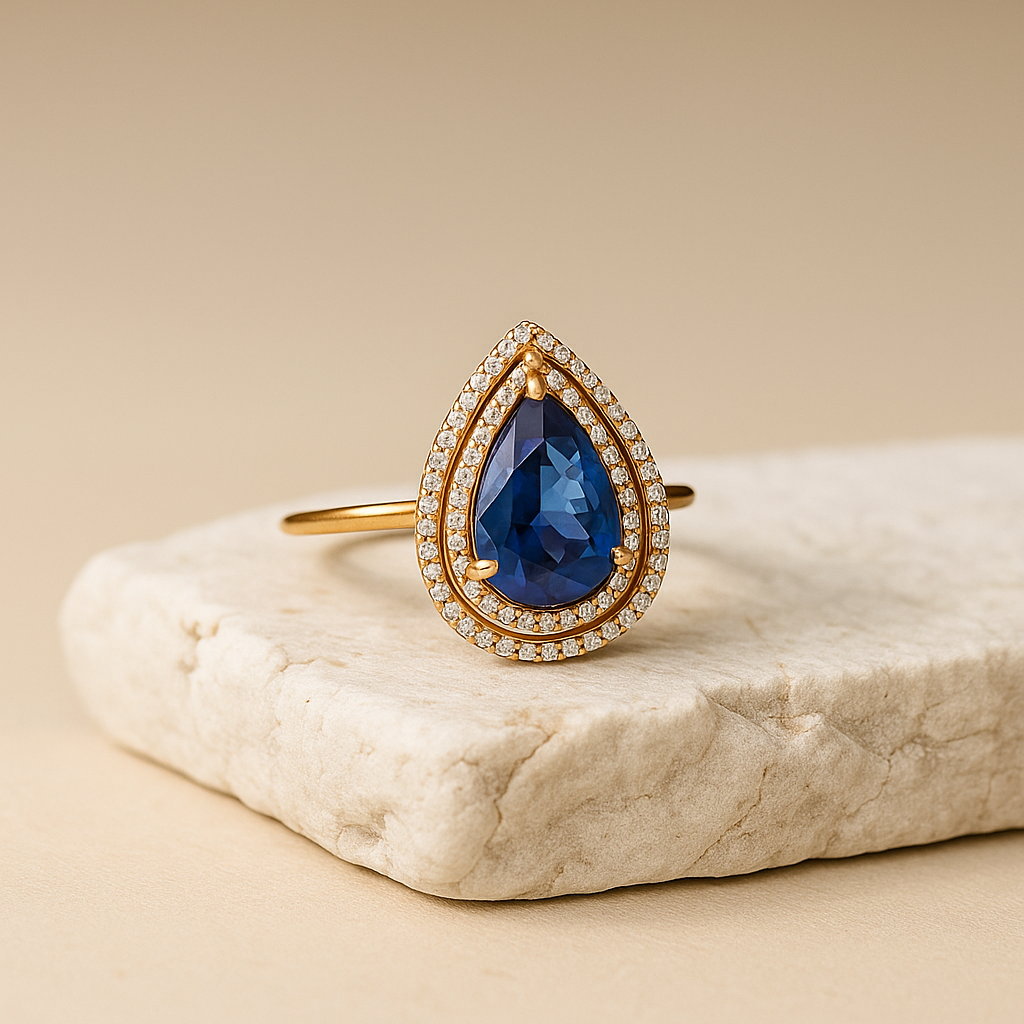
Blue sapphire itself can also look very modern. A pear-shaped stone, an asymmetrical setting or a combination with diamonds can completely change its personality. This is what makes sapphire so interesting: it can respect tradition without being limited by it.
At Eterling, we love gemstones that reveal something more when you look closely. Sapphire does exactly that. Behind its familiar name lies an entire world of colour, light and character.
It is not simply September’s blue birthstone. It is a gemstone with many different identities, ready to become part of your own.


Sapphire has created some of the most recognisable jewellery moments in modern history.
Perhaps the most famous is the 12-carat oval blue sapphire engagement ring originally worn by Princess Diana. Surrounded by 14 diamonds, it was later given by Prince William to Catherine, Princess of Wales, and has become one of the most recognisable jewels in the world.
 (FB)
(FB)
Elizabeth Taylor, one of Hollywood’s greatest jewellery collectors, owned several extraordinary sapphire pieces. Among them was a Bulgari Trombino ring featuring an unheated Sri Lankan sapphire of more than 25 carats, purchased in 1971. She also owned a spectacular Bulgari sautoir centred on a 52.72-carat sugarloaf sapphire.
 (FB)
(FB)
Actress Elizabeth Hurley received a blue sapphire engagement ring of approximately 9 carats, framed by two triangular diamonds. Its clean three-stone design offered a contemporary interpretation of this traditionally romantic jewel.
 (FB)
(FB)
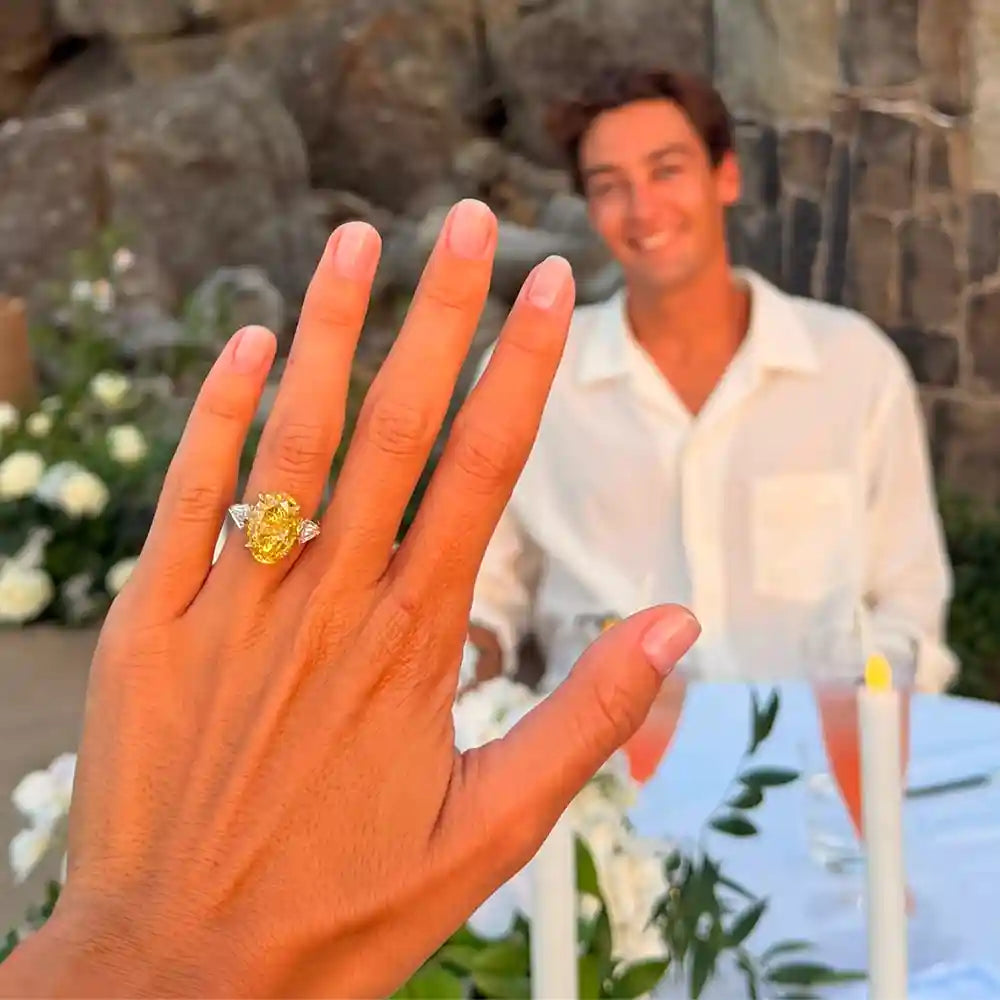
Jenny McCarthy chose a completely different version: a yellow sapphire engagement ring of approximately 10 carats, surrounded by diamonds. It is a perfect reminder that sapphire does not have to be blue to make an impact.
 (enews)
Penélope Cruz has also been seen wearing a vintage-inspired blue sapphire engagement ring surrounded by diamonds in a floral design, reportedly given to her by Javier Bardem.
 (FB)
(FB)
These jewels reveal the many identities of sapphire. It can be historic or contemporary, Hollywood-inspired or vintage, romantic or boldly unexpected. Its colour may change, but sapphire always has a way of becoming the centre of the story.