Cart
0
Recommended for you



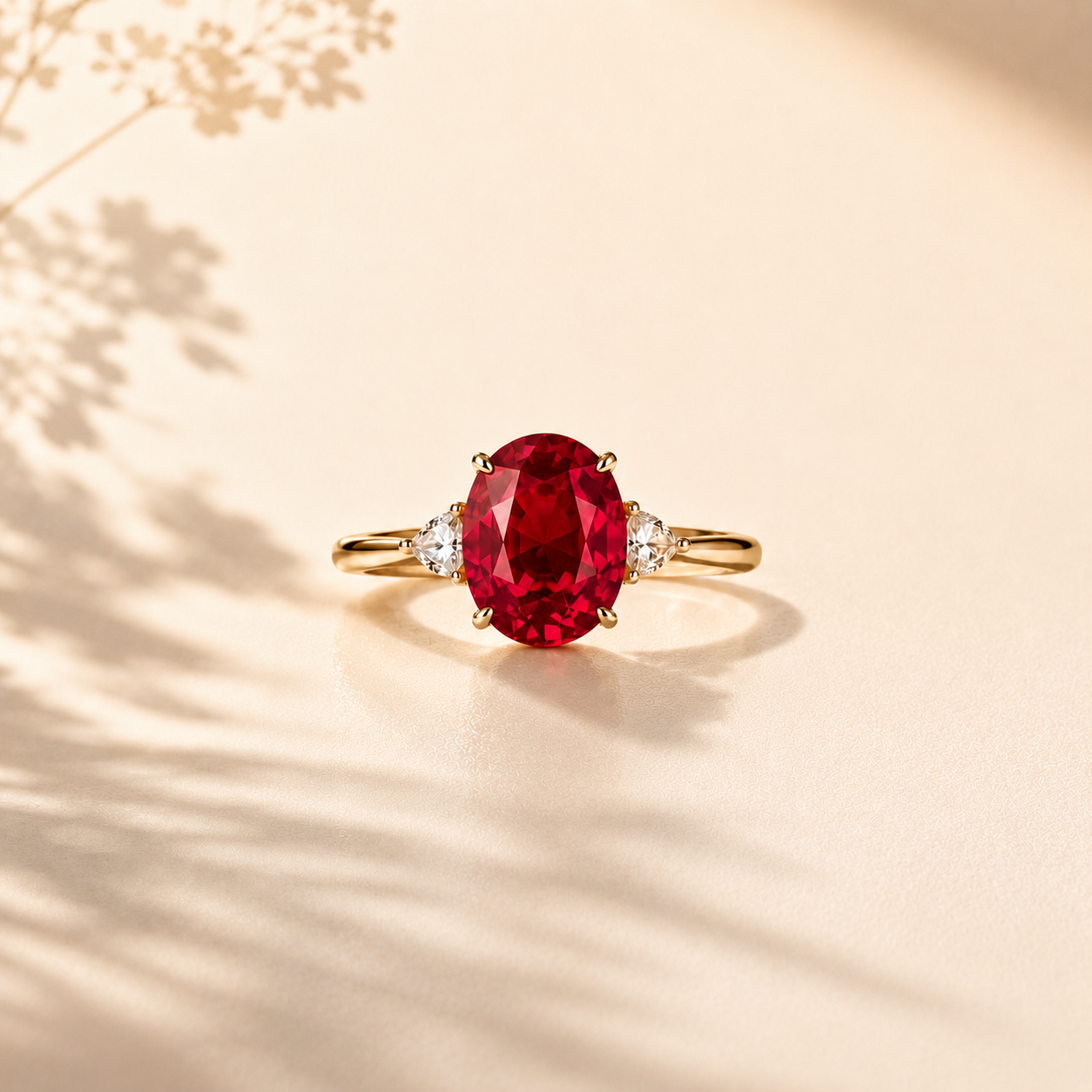
Few gemstones have a presence quite like ruby. July’s birthstone is intense, magnetic and full of character, admired for centuries as a stone of love, courage and power. Its deep red colour has crossed cultures, royal courts and generations, always carrying the same message: this is not a shy gemstone.
Often called the “king of gems”, ruby has long been associated with nobility, passion and protection. In ancient traditions, it was believed to bring strength, wisdom and vitality to the person wearing it. Its red colour naturally linked it to the heart, to desire, to romance, but also to energy and determination. Ruby is not only a stone of love. It is also a stone of presence.
At Eterling, we love ruby for exactly that reason. It is precious, of course, but it is also expressive. A ruby jewel does not simply complete an outfit. It adds warmth, character and a certain intensity, the kind of detail that makes a piece feel personal.
Ruby has always had a special place in the world of jewellery. For centuries, it appeared in royal collections, ceremonial jewels and family heirlooms, often chosen not only for its beauty but also for what it symbolised: power, protection, passion and continuity.
Its durability also played an important role in its history. Ruby belongs to the corundum family, the same mineral family as sapphire, and ranks 9 on the Mohs scale of hardness. This makes it one of the most durable gemstones used in jewellery, suitable for rings, necklaces, earrings and pieces designed to be worn often. When chosen and cared for properly, ruby is a stone that can be passed down from one generation to the next.
Some of the most memorable ruby jewels have belonged to queens, princesses and collectors, from historic royal necklaces and tiaras to exceptional high-jewellery creations. Ruby has also found its place in Hollywood, worn by actresses and style icons who understood its very particular glamour. Unlike diamonds, which often speak through brilliance, ruby speaks through colour. It is sensual, bold and unforgettable.

Today, ruby remains one of the most important coloured gemstones in the world. Fine-quality rubies, especially those with vivid red colour, good transparency and strong saturation, are highly sought after. Exceptional rubies can reach some of the highest prices per carat among coloured gemstones, particularly when they combine beautiful colour, strong clarity and limited treatment.
The ruby market has also evolved. Historically, Burmese rubies were considered the most prestigious, especially stones with the famous “pigeon blood” red colour. Today, rubies from Mozambique have become increasingly important and have brought new visibility to the market. Some exceptional Mozambique rubies have achieved remarkable auction results, proving that origin matters, but beauty, quality and transparency matter even more.
This is also why ruby is a gemstone where education is essential. Most natural rubies on the market have been treated, often with heat, to improve their colour or clarity. Heat treatment is common and widely accepted when properly disclosed. Other treatments, such as fracture filling or glass filling, can significantly affect durability, value and care requirements. For important ruby purchases, a gemological certificate is always recommended, especially to confirm whether the stone is natural, treated, synthetic, and sometimes to indicate geographic origin.
In other words, ruby is still very desirable today, but not all rubies are equal. A beautiful ruby jewel is about colour, light, origin, treatment, cut and emotion. It is also about choosing a stone that feels right.

Ruby has always been linked to strong emotions: love, passion, vitality, courage, protection and success. It is a gemstone that carries a lot of symbolism, but without feeling delicate or fragile. Ruby feels alive.
It is often chosen for romantic jewellery, especially engagement rings and anniversary pieces, because of its association with the heart and everlasting love. But ruby is not only romantic. It can also feel powerful and modern, especially when set in clean gold designs, sculptural shapes or unexpected combinations with diamonds, pink sapphires or other coloured stones.
A ruby can be classic, but it does not have to be traditional. It can be worn as a statement ring, a delicate pendant, a colourful everyday piece or a bold jewel with character. That is what makes it so interesting: ruby adapts, but it never disappears.
As the birthstone of July, ruby feels almost obvious. Its colour has the warmth of summer, the intensity of emotion, and that little fire that makes a jewel feel alive. More than a simple red stone, ruby has always been linked to love, courage and vitality, which makes it one of the most symbolic birthstones of the year.
Ruby also has the advantage of being both meaningful and strong. With a hardness of 9 on the Mohs scale, it is one of the most durable coloured gemstones, suitable for pieces that can be worn often, from rings and pendants to earrings or bracelets. A ruby birthstone jewel can be romantic, bold, vintage-inspired or very modern, depending on the design.
That is why ruby remains such a beautiful choice for July: it carries history, emotion and character, but it never feels frozen in the past. It is a birthstone with presence, made for those who like jewellery that says something.
Choosing a ruby for someone born in July is therefore never just about the month. It can mark a birthday, of course, but also a personal moment, an anniversary, a new chapter or a piece of jewellery that becomes part of someone’s story. This is what makes birthstones so special: they give a jewel a more intimate meaning, without needing to explain too much.

The most important factor in a ruby is its colour. The most prized rubies usually show a vivid red to slightly purplish red colour, with enough depth to feel rich but not so dark that the stone loses its brightness. If the colour is too light, the stone may be classified as pink sapphire rather than ruby, depending on the market and gemological interpretation.
Clarity is also important, but ruby is different from diamond. Natural inclusions are expected and can even contribute to the character of the stone. What matters is whether the inclusions affect the beauty, transparency or durability of the gem. A ruby should have life. It should catch the eye, not feel flat.
Cut also plays a key role. A well-cut ruby will reveal the best of its colour and brightness. Because fine ruby rough is rare and valuable, cutters often try to preserve as much weight as possible, which means that proportions can vary. A good ruby is not only about carats. It is about balance.
And finally, treatment disclosure is essential. A natural heated ruby, an untreated ruby, a glass-filled ruby and a lab-created ruby are very different things. They can all be beautiful, but they should not be presented or priced in the same way.
Ruby is one of the hardest coloured gemstones and is generally suitable for everyday jewellery. That said, hardness does not mean indestructible. Like all fine jewellery, ruby pieces should be treated with care.
For most ruby jewellery, the safest home cleaning method is simple: warm water, mild soap and a soft brush. Gently clean around the stone and setting, rinse carefully and dry with a soft cloth. Avoid harsh chemicals, acids and abrasive products.
Ultrasonic and steam cleaning may be safe for some untreated or heat-treated rubies, but they are not recommended if the stone has been fracture-filled, cavity-filled or dyed. These treatments can be damaged by heat, vibration or chemicals. If you are unsure about the treatment of your ruby, the safest option is always gentle cleaning by hand or professional cleaning by a jeweller.
It is also a good idea to check the setting from time to time, especially for rings worn often. Ruby is strong, but claws, prongs and gold settings can still move with daily wear.

Ruby is not a discreet gemstone. It has colour, history, symbolism and strength. It belongs to queens and collectors, but also to modern women who want jewellery with warmth, depth and personality.
For us, ruby is a perfect example of what jewellery can be: beautiful, meaningful and full of character. A stone that speaks of love, but also of courage. A stone that feels precious, but never cold. A stone that has travelled through history, and still feels completely alive today.
Ruby is for those who want a jewel with intensity. A piece that does not just shine, but says something.